
Keep It or Sell It? When Heirs Must Decide the Future of a Collection
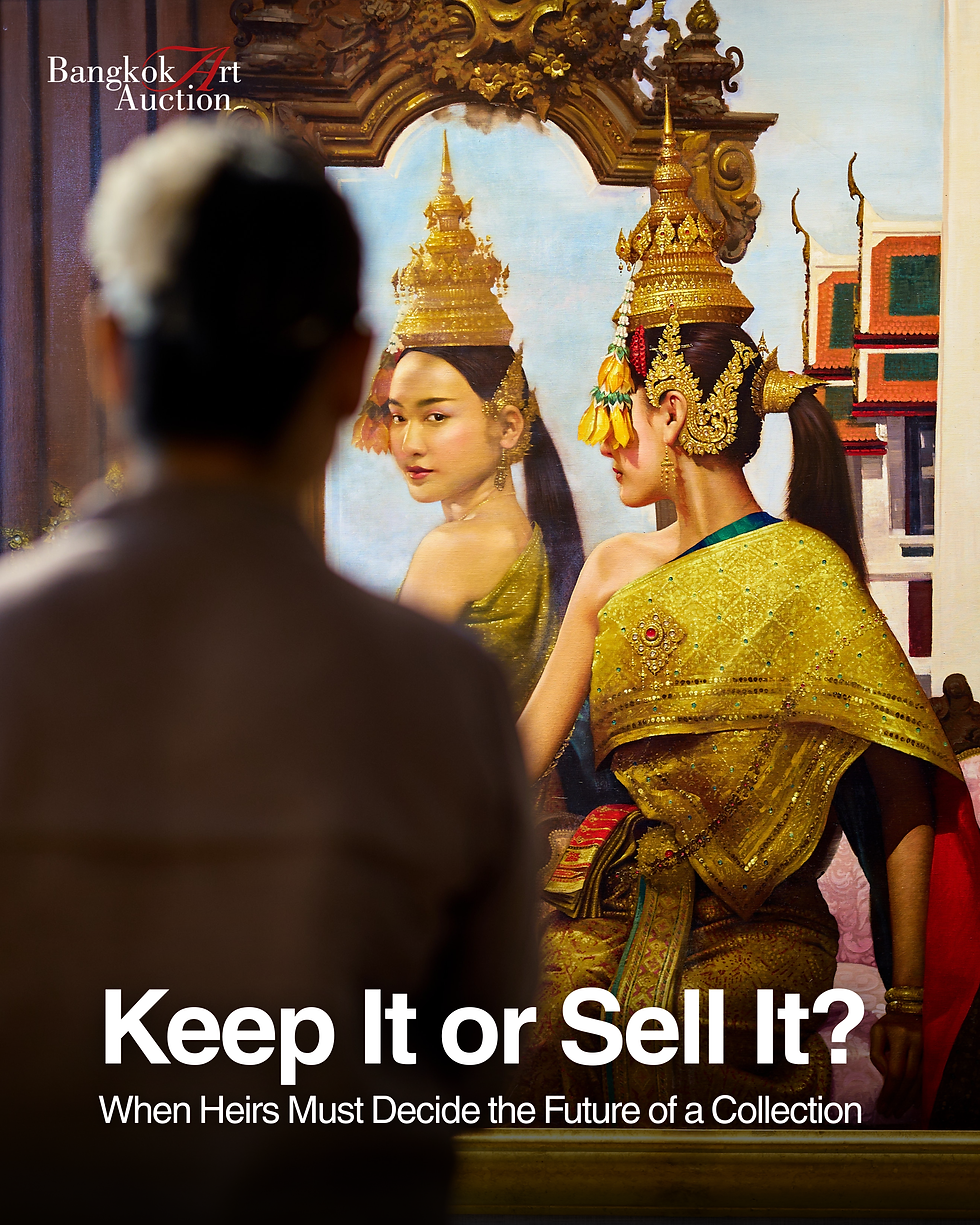
When collectors bring a work of art home, they may be thinking about its beauty, their personal connection to it, or the possibility that its value will rise in the future. Yet one important question often remains unanswered: when the owner is no longer here, who will care for the collection?
Today, the global art market is being driven in part by collections assembled by an older generation of prominent collectors, including Paul Allen, S.I. Newhouse, Leonard Lauder, Marian Goodman, and Barbara Gladstone. Works that had been absent from the market for decades are gradually returning to auction as their owners pass away, grow older, or reach the end of their collecting journey.
What is happening is therefore more than a wave of major art sales. It is a generational transition—from those who selected the works and lived with them to the children and grandchildren who must decide what to do with what they have inherited.
Parents Collected with Passion; Their Children Inherit the Questions
For collectors, each work may mean far more than its market price. It may evoke memories of a journey, represent a friendship with an artist, or mark an important moment in life. Their children, however, may not share the same relationship with those works.
A painting that hung in the living room throughout their childhood may feel more like “Dad’s painting” than something they want in their own home. Tastes differ across generations. Heirs may not have enough space, or they may live in different countries, making a large collection difficult to manage.
Inheriting art is therefore very different from inheriting cash or real estate. Art requires suitable storage, security, insurance, climate control, conservation, and documentation of its provenance. For a substantial collection, these responsibilities can be costly and demand specialist knowledge.
The word “inheritance” always has two sides: the value being passed down and the responsibility the recipient may never have chosen for themselves.
Heirs Inherit More Than Objects—They Inherit Difficult Decisions
When a collection passes to the next generation, heirs usually face a limited set of choices: keep everything, divide it among family members, donate it to a museum, establish a foundation, or sell some works while retaining others. Every option comes with complications.
If several siblings inherit a collection together, who should receive its most important work? Should the collection be divided according to value, size, or emotional attachment? If no one wants to sell but one heir needs cash, how can the family reach an agreement? And if one work is worth far more than the rest of the estate, can the inheritance truly be divided equally?
Many disputes do not arise because family members fail to appreciate art. They arise because each person values the same work differently. One may see it as a final memory of a parent, while another sees an asset that should be sold so the proceeds can be divided fairly. For someone else, the work may bring taxes and expenses that no one was prepared to handle.
Without a clear plan, art that once brought a family together can become a source of tension after the collector is gone.
Why Many Heirs Choose to Sell
Selling a collection does not necessarily mean that the next generation lacks respect for the collector. In many cases, a sale is the most practical choice.
The first reason is tax and other financial obligations. A large estate may create liabilities that must be settled within a fixed period. Art can be highly valuable, but it cannot always be converted into cash quickly. A family may therefore need to sell part of a collection in order to preserve the rest of the estate.
The second reason is the cost of care. The responsibilities associated with an expensive painting do not end on the day it is inherited. That day may instead mark the beginning of new costs, including insurance, storage, condition assessments, conservation, and transportation.
The third reason is a difference in taste. Children may prefer different artists or types of art from their parents and may want to arrange their homes around their own way of living.
Finally, there is the need to divide assets clearly. Turning art into cash can make it easier to distribute an estate among several beneficiaries than deciding who should own each individual work.
Auction houses can therefore play an important role. They can value works, schedule sales, and manage several categories of property at once—from paintings, furniture, and design to jewellery, watches, and collectibles.
For a family responsible for hundreds of objects, being able to place the entire process in the hands of a single organisation can be highly appealing.
Beyond the Auction: Passing On the Collector’s Story
Collections belonging to prominent individuals are often presented as historic events. The works are not sold merely as separate objects; they are connected to the life, taste, and identity of their former owner.
Catalogues, exhibitions, videos, and publicity can portray collectors as people of discerning taste or as individuals who recognised the value of art. Even after the works have dispersed among new owners, the collector’s story remains documented and discoverable.
For heirs, an auction can therefore resemble a final public memorial to the family. It offers a chance to show that the person who has passed away did more than accumulate valuable possessions: they had taste, knowledge, and a place within cultural life.
Still, it is important to distinguish between a collector’s history that genuinely deepens our understanding of the works and a marketing narrative designed to increase the desire to buy.
The name of a legendary collector can add real historical value to a work. Yet not every wealthy owner carries equal cultural significance. Auction houses have a direct incentive to present each collection as the legacy of a remarkable individual, because a compelling story can generate attention, competition, and higher prices.
Choosing Who Will Handle the Collection
Once a family decides to sell, an important next step is choosing someone who understands both the value of the works and the story of the collection. Each auction house or adviser may offer a different approach, network of buyers, and area of expertise.
The decision is not based on figures alone. Trust, the proposed publicity strategy, and the ability to present the works to the right buyers also matter—particularly when a collection spans several kinds of art and collectibles.
For a family, a good sale adviser should do more than manage the process. They should also be able to convey the collector’s identity and intentions, allowing the collection to pass into new hands in a way that respects the story of its former owner.
What Today’s Collectors Should Prepare for Their Children
The most important lesson from the wave of estate collection sales may not be about the market at all. It may be about families.
Many collectors spend decades building a collection but very little time explaining how they want it to move forward. Without a plan, their children must make decisions under pressure. They may not even know which works matter most, why they were acquired, or whom they should approach for advice.
What collectors leave behind should therefore extend beyond a will. It should include:
• A complete inventory, with photographs, dimensions, media, and up-to-date condition information
• Receipts, certificates of authenticity, provenance records, and import-export documents
• Contact details for trusted galleries, artists, curators, valuers, and other specialists
• Recent valuations for insurance, tax, and estate-distribution purposes
• Guidance on which works should be kept or donated and which may be sold
• A plan for conservation and storage costs
• Personal stories connected to important works
• Conversations with family members in advance, so it is clear who wishes to take responsibility for the collection and who does not
Most importantly, collectors should ask their children directly whether they genuinely want the collection.
The answer may not be what they expect. But hearing it today is better than leaving the family to disagree at a time when the collector is no longer able to explain their intentions.
Selling Does Not Have to Mean Erasing a Legacy
Some collectors feel that preserving a legacy means keeping an entire collection together. In reality, most private collections change over time. Even museums sometimes sell works in order to refine the direction of their collections.
A legacy does not have to mean keeping every object in one place. It may mean donating important works for the public to enjoy, retaining selected pieces within the family, selling some works to support the care of others, or creating records that preserve the collection’s history.
In some cases, a carefully planned sale can protect a legacy more effectively than asking the next generation to assume responsibility for a collection they are not equipped to manage.
The central issue is not simply whether a collection is sold. It is whether the sale reflects a considered intention or takes place in haste because no one prepared for the future.
Will the Next Generation Buy What the Previous Generation Collected?
As more exceptional works from estates enter the market, another question emerges: will younger collectors want to buy them?
Buyers under the age of forty are playing a larger role at auction, but the arrival of younger buyers does not mean that they will automatically share the tastes of earlier generations. They may be drawn to different artists, care about different social issues, or have less desire to own large numbers of objects than collectors in the past.
This could produce two changes at the same time.
On one hand, masterpieces that have been absent from the market for decades may attract intense competition, because quality and rarity can remain compelling across generations.
On the other hand, works that once commanded high prices because they reflected the tastes of an earlier generation may no longer receive the same level of attention if younger buyers do not assign them the same cultural value.
The Great Wealth Transfer therefore represents more than the movement of assets. It is also a major test of value: which works matter because of their own enduring qualities, and which are expensive because one generation collectively agreed that they mattered?
The True Legacy May Not Be the Painting on the Wall
Ultimately, every work of art will change hands—through a sale, a gift, a donation, or an inheritance. No private collection can remain with the same owner forever. Collectors should therefore consider the future of their collections while they are still able to make decisions, rather than leaving death to become the final curator.
What their children may need most is not another expensive painting, but clarity: why these works matter, what should be preserved, and what may be released without guilt.
The best artistic legacy may not be one that asks the next generation to keep everything exactly as it was. It may instead provide them with the knowledge, stories, and freedom to decide where the art should travel next.
.
.
Contact us
Tel : (+66) 64 482 9394 , (+66) 96 294 6446
WhatsApp: (+66) 64 482 9394
Line Official Account: @bangkokartauction
E-mail: info@bangkokartauction.com
#BangkokArtAuction #ThailandFirstArtAuctionHouse #ArtAuction #ArtMarket #Masterpiece #ArtHistory #FineArt #ArtCollectors #AuctionHighlights #CollectingArt #InvestmentInArt #BlueChipArt #ModernArt #ContemporaryArt


Comments